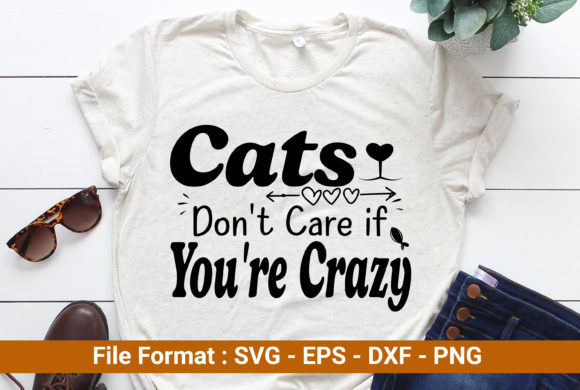
Cats Don't Care if You're Crazy
As an embroidery designer and product reviewer, I've seen my fair share of digital designs. But when I came across Cats Don't Care if You're Crazy, I knew it had the potential to be more than just a cute graphic—it could be a versatile and eye-catching addition to a wide range of projects. Let's break down what this design brings to the table, how it performs in real-life use, and where it might fall short.
The First Impression
Cats Don't Care if You're Crazy has a playful, irreverent vibe that immediately grabs attention. The design centers around a stylized cat with a bold, confident expression, surrounded by a simple yet striking background. The overall layout is clean and uncluttered, making it ideal for a variety of applications. The level of detail is moderate—enough to make the design stand out but not so intricate that it becomes overwhelming or difficult to stitch.
This design feels like it belongs on custom apparel, especially items that aim to make a statement. It’s perfect for tote bags, sweatshirts, and even baby clothes, where the message can be both fun and meaningful. The visual personality is casual, approachable, and slightly edgy, which makes it appealing to a broad audience.
Real-Life Embroidery Performance
When I tested Cats Don't Care if You're Crazy on different fabrics, it performed well on most standard materials. The stitch density is balanced, allowing for good coverage without being too heavy. This makes it suitable for a range of embroidery projects, from personalized gifts to commercial merchandise.
On a cotton t-shirt, the design looked sharp and clear, with no issues in the satin stitches or fill areas. For a tote bag, the design maintained its integrity, even on a slightly thicker fabric. However, I noticed that on stretchy or thin fabrics, the design could become slightly distorted, especially if not properly stabilized.
One area where Cats Don't Care if You're Crazy shines is in its adaptability. Whether you're creating an embroidered patch, a pillow cover, or a kitchen towel, the design holds up well. It also works nicely as a printable mockup, helping to visualize how the final product will look before committing to a full project.
Where to Use With Caution
While Cats Don't Care if You're Crazy is versatile, there are some situations where it might not perform as well. On small hoop sizes, the design can feel cramped, especially if you're trying to include all the details. This could lead to stitching errors or uneven results.
For textured fabrics or dark backgrounds, the design may not show up as clearly. If you're planning to use it on a black shirt or a fabric with a lot of texture, you might want to adjust the thread color or consider an applique design to ensure visibility. Similarly, on thin or stretchy fabrics, proper stabilizer use is crucial to prevent puckering or distortion.
Curved surfaces like caps or hats can also be a challenge. The design’s corners and edges might not sit perfectly on a rounded surface, leading to a less polished finish. In such cases, it might be better to simplify the design or use a different approach for curved areas.
Impact on Visual Appeal and Product Value
Cats Don't Care if You're Crazy adds a unique touch to any project it's used on. Its boldness and simplicity make it instantly recognizable, which is great for brand consistency and customer recognition. When used on handmade products or personalized gifts, it helps elevate the overall appeal and perceived value.
From a commercial perspective, this design could be a strong asset for an Etsy seller or a small shop owner. It's easy to market, visually engaging, and adaptable to multiple products. However, it’s important to ensure that the design aligns with your brand’s aesthetic and target audience. If your business leans toward more subtle or minimalist styles, this design might not fit as well.
Practical Designer Notes
Before using Cats Don't Care if You're Crazy in a client project or for sale, I recommend testing it on scrap fabric first. This will help you see how the design looks in real life and identify any potential issues. Check the thread color contrast, especially if you’re using it on dark or light backgrounds.
Review the stitch density to ensure it’s appropriate for your project. If the design is too dense, it could cause problems on certain fabrics. Confirm the hoop size required for the design, and make sure it fits your machine’s capabilities. Inspect small details closely, as they can sometimes get lost in the stitching process.
Test the design in black and white mockups to see how it looks without color. Compare it against both light and dark fabric backgrounds to determine the best placement. Always use the right stabilizer for the fabric type, and check whether the design is suitable for both personal and commercial use.
Finally, confirm the licensing terms before selling finished items or digital products. While Cats Don't Care if You're Crazy seems to be a straightforward design, it’s always wise to double-check the usage rights to avoid any legal issues down the line.
Final Thoughts
Cats Don't Care if You're Crazy is a solid choice for designers, crafters, and small business owners looking for a fun, versatile embroidery design. It works well on a variety of projects and has the potential to add personality and charm to handmade products, personalized gifts, and commercial merchandise.
With proper preparation and consideration for fabric type, hoop size, and stabilizer use, this design can be a valuable addition to your collection. Whether you're creating a custom sweatshirt, a baby onesie, or a holiday gift, Cats Don't Care if You're Crazy offers a fresh and engaging option that’s sure to stand out.